PAY IN 3
 FREE DELIVERY OVER £50 +VAT*
 NEXT DAY DELIVERY BEFORE 7.30PM*
Exosomes and Menopausal Skin: What Your Clients' Skin is Actually Going Through
23rd Sep 2026
She's probably sitting in your treatment room right now. She may have mentioned that her skin has "completely changed" in the last year or two. That products she's used for years don't seem to work the same way anymore. That she feels like she's ageing faster than she should be.
She may or may not have told you she's going through menopause. And even if she has, the connection between that and what's happening to her skin may not have been made explicitly.
This is one of the most significant and undertreated areas in professional skincare, and it's a conversation most treatment rooms aren't having in enough depth.
What actually happens to skin during menopause
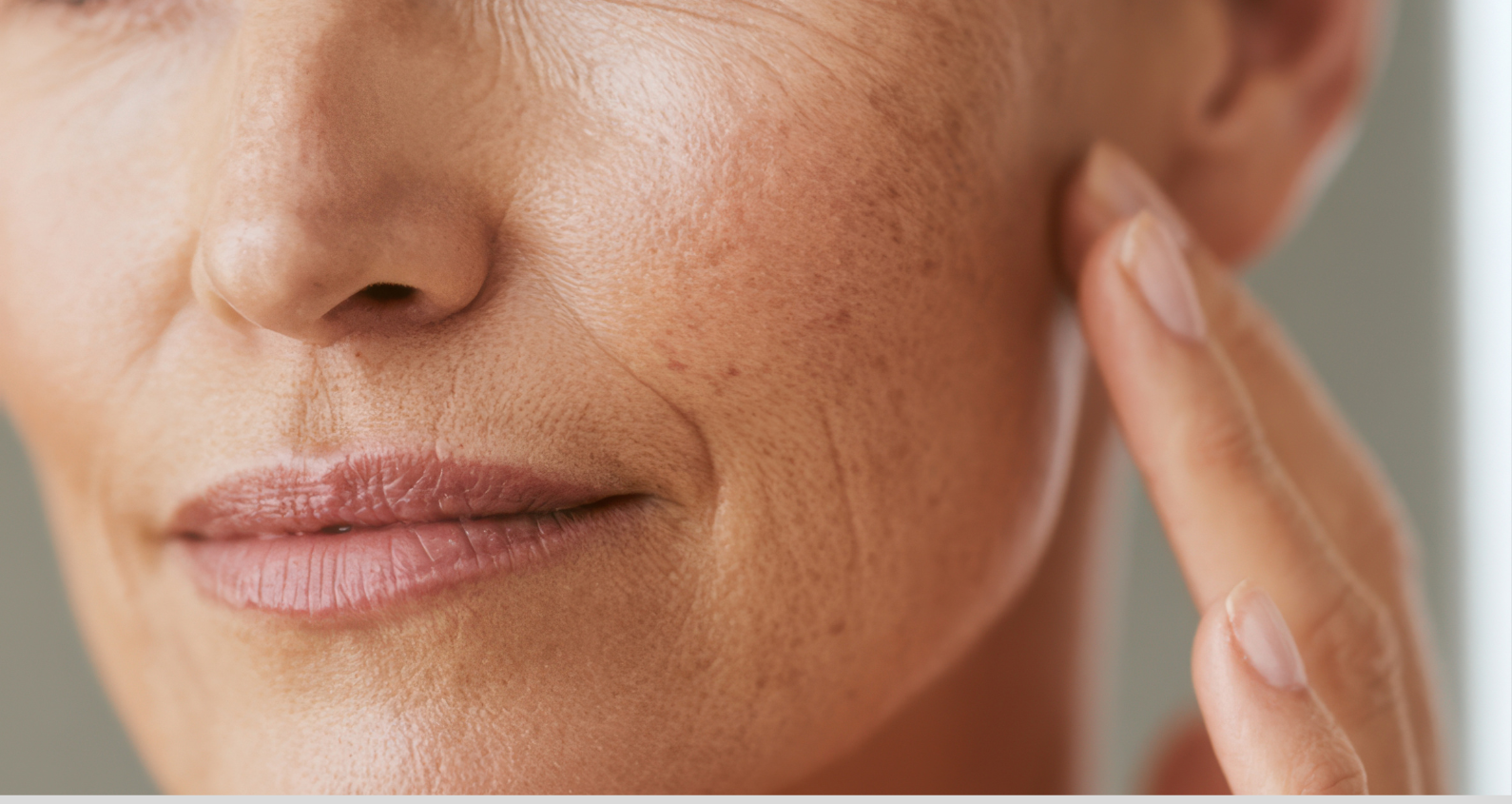
The skin changes associated with menopause are biological, driven by a sharp decline in oestrogen that changes how skin functions at a cellular level.
Oestrogen plays a critical role in collagen production and its decline triggers a structural shift that affects firmness, elasticity, and the skin's ability to repair itself. At the same time, ceramide production decreases, compromising the skin barrier. Cell turnover slows. Hyaluronic acid levels drop.
The result is skin that looks and behaves completely differently: sudden sensitivity, persistent dryness, loss of firmness, deeper lines, dullness. Clients often describe it as their skin feeling like it belongs to someone else.
The therapist who can explain what is happening becomes an essential part of her care, not just someone who gives her a facial.
What exosomes are and why they matter here
Exosomes are the messengers the skin uses to tell its own cells what to do, when to repair, and how to regenerate.
As skin ages, that cellular communication breaks down. Cells become less responsive, stopping the signals they need to function effectively. This is what cellular senescence means in practice, not that the cells have died, but that they've stopped behaving like young cells.
This is why exosomes are particularly relevant to menopausal skin. The underlying issue isn't just loss of hydration or collagen. It's a breakdown in the communication that drives all of those things. Exosomes restart that conversation, carrying signals that trigger repair, regeneration, and the reversal of cellular senescence.
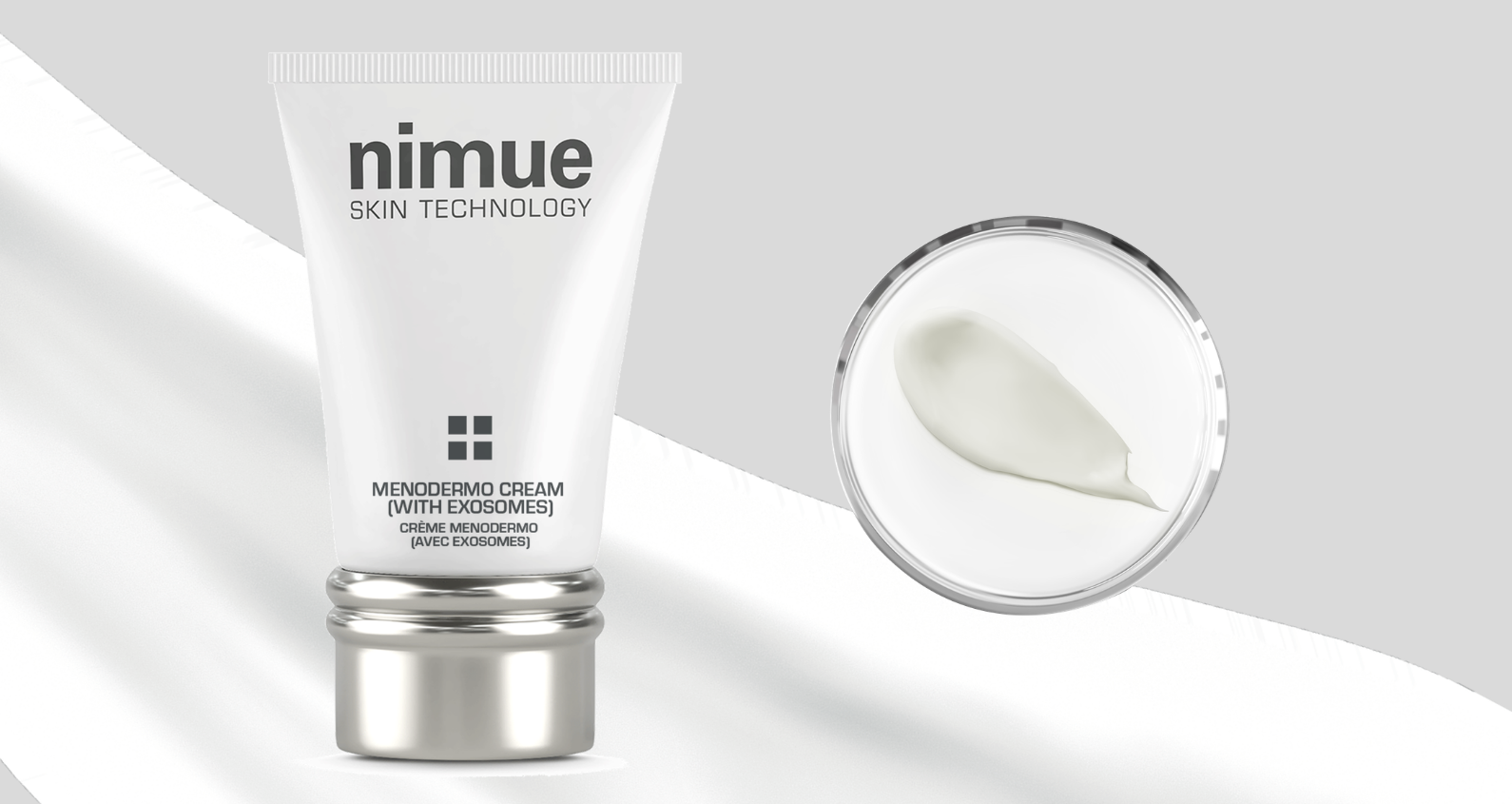
This is where Nimue MenoDermo Cream (with Exosomes) earns its place. Formulated specifically as a skin longevity strategy for women during menopause, it combines Phytotech Exosome plant stem cells with a vegan skin-identical Collagen Peptide Complex and Flax Seed Oil to deliver barrier recovery, visible firming and wrinkle reduction through consistent homecare.
The consultation opportunity
Most menopausal clients haven't been told their skin changes are hormonal. Many assume they're simply ageing badly, or that they've failed to maintain their skin.
Being the therapist who understands the biology changes that relationship entirely. Collagen loss is oestrogen-driven. Barrier compromise is hormonal. The right homecare can genuinely change what their skin is capable of, and that conversation builds a level of trust no product recommendation alone can create.
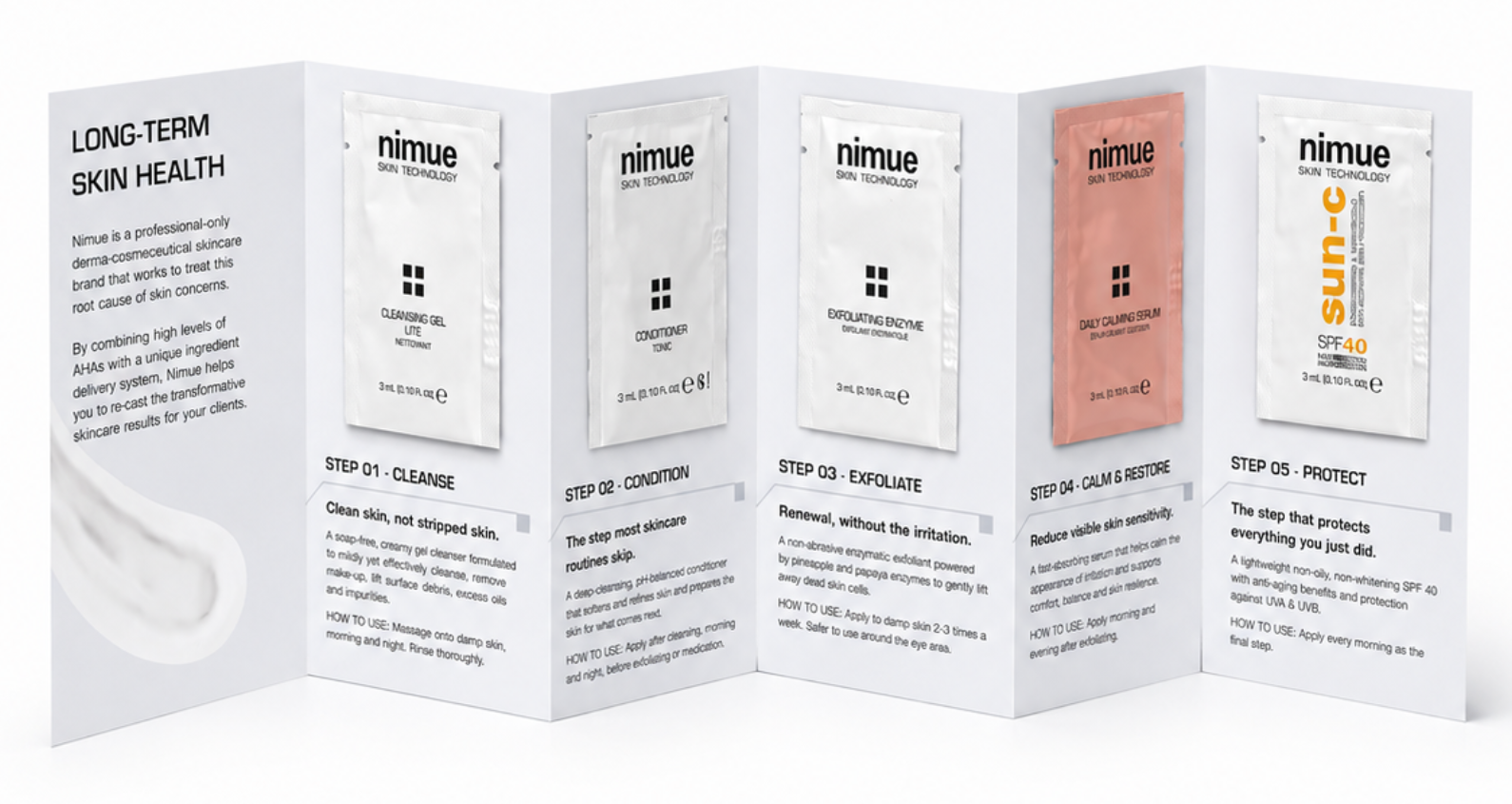
If you haven't tried Nimue yet, the sample sachet booklet is the place to start. Use code TRYNIMUE to claim your free sample, just cover postage.